Business Headlines
Delivering sincere shared knowledge
Commercial Kitchen Encyclopedia
Related columns:Business HeadlinesIndustry InformationCommercial Kitchen Encyclopedia
A Real-World Account of Installing a Long Line of Commercial Dishwashers: How a School Cafeteria's Disinfection Line Works
2026-10-07 14:22:58Back to list
On the afternoon of October 6, 2026, in the kitchen of a foreign language school in Chaoyang District, Beijing, a long-line commercial dishwasher completed its final installation and debugging. The engineer switched on the power and turned on the water valve; the numbers on the control panel jumped up: main wash 57℃, rinse 98℃. The toothed conveyor belt slowly turned, awaiting the first basket of dishes to be washed. This three-minute engineering record perfectly captured the crucial steps of a long-line dishwasher from "installation" to "operation." This article will use this installation as a guide to thoroughly explain the principles, temperatures, operation, and maintenance of long-line dishwashers.
1. Long-line dishwasher: Turning "dishwashing" into an assembly line
The main type of dishwasher, also known as a tunnel dishwasher, is characterized by its "continuous washing." After pre-removal of food residue, the dishes are stacked on a toothed conveyor belt, which carries them sequentially through the pre-wash section, main wash section, rinsing and sanitizing section, and drying section. The entire process is uninterrupted and non-reversible, resembling an assembly line. Compared to lift-top or basket-fed models that wash one basket at a time, the main type's advantages lie in its large throughput and continuous output. Dishes enter from one end and exit from the clean end, with a clear and non-intersecting flow.
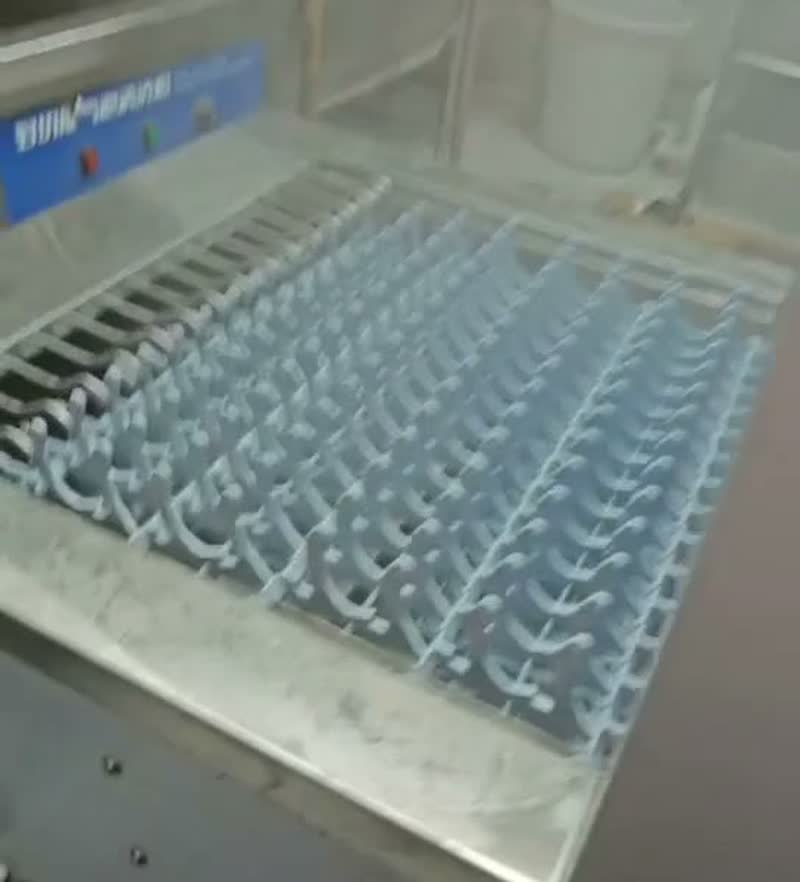
▲ Toothed conveyor belt: Columnar teeth support bowls, plates, and dishes, carrying the tableware continuously through each washing section.
Because of this continuous operation characteristic, long-line dishwashers are particularly suitable for scenarios where tableware is concentrated and the output of a single meal is large: school canteens, government and corporate canteens, central kitchens, tableware disinfection centers, etc. It is difficult to wash the dishes after hundreds or even thousands of people have eaten by manpower or small equipment within a single meal collection period, but long-line dishwashers can turn this task into "put it on, walk over, and collect it clean".
II. Temperature is the soul of disinfection: 57℃ main wash, 98℃ rinse
During installation and commissioning, the first thing the engineers checked were the two temperature settings. The digital display on the control panel clearly showed: the main wash section was about 57℃, and the rinsing section reached as high as 98℃. Behind these two figures lies the basic logic of commercial washing and disinfection—the main wash uses hot water at 55℃-60℃ in conjunction with detergent to dissolve grease and remove food residue; the rinsing section uses high-temperature water above 82℃ for the final rinse, which not only removes residual detergent but also achieves disinfection through heat.
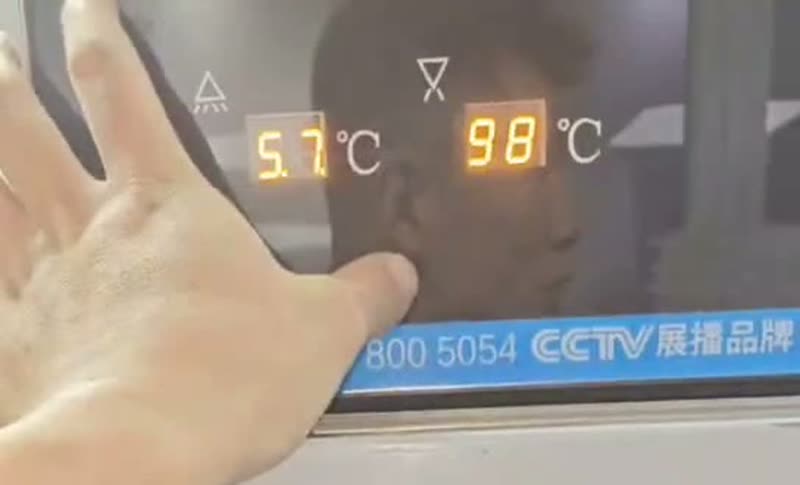
▲ Control panel digital display: main wash 57℃, rinse 98℃, temperature meets the standard to ensure both cleaning and disinfection.
The machine's rinsing temperature reached 98℃, exceeding the common threshold for heat sterilization. This means that tableware is sterilized immediately after being removed from the pot, which is especially important for places like schools with extremely high hygiene requirements. In daily use, it's essential to develop the habit of checking the temperature before turning on the machine: a low main wash temperature often results in incomplete oil dissolution, while an insufficient rinsing temperature reduces sterilization effectiveness. If any abnormalities are found, the heating element and temperature control system should be checked promptly.
Three- or four-step operation method: power on, clean, power off, and maintain.
A prominent operation flowchart is affixed to the side of the device, summarizing daily use into four steps. Step 1Power onStep 1: Turn on the water tap and switch on the power to allow the equipment to fill with water and heat up; Step 2CleaningPress the start button, the conveyor belt starts running, and the tableware is fed in sequentially after pre-removing residue; Step 3Power offStep 4: Turn off electrical appliances, pull down the main power switch, and end the day's work.maintainanceDrain the wastewater, clean the slag basket, and disassemble and wash the main spray arm to prepare for the next day.
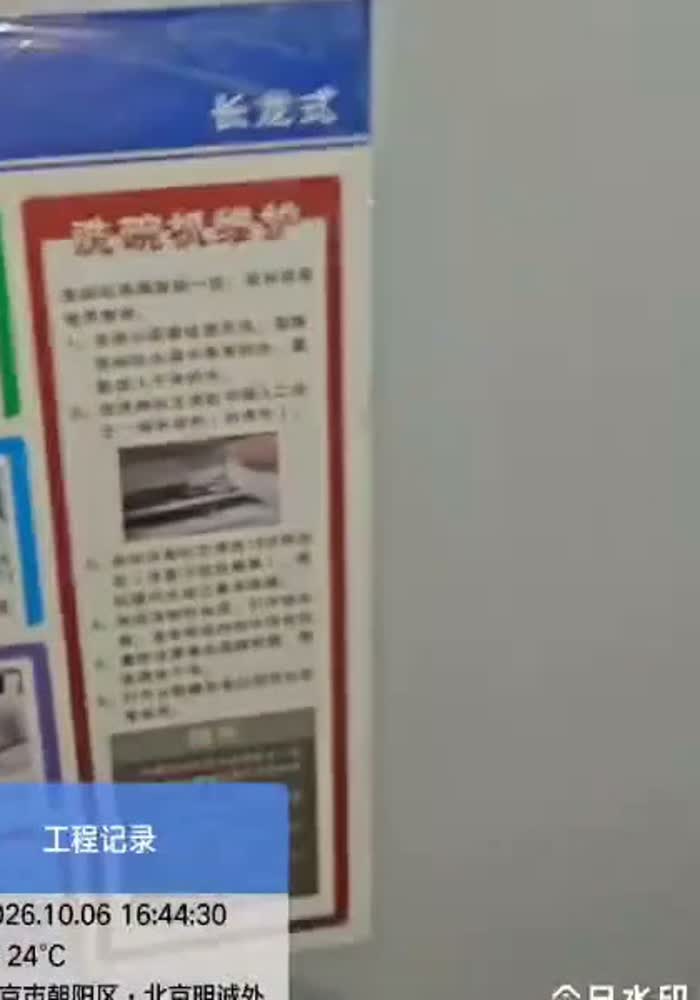
▲ Machine Operation Poster: Long queue process and key points for dishwasher maintenance; four-step method to help new employees operate the machine correctly.
Of the four steps, the most easily overlooked are "pre-removal of food scraps" and "post-shutdown maintenance." Large particles like bones, rice grains, and toothpicks, if fed directly into the machine, will clog the filter and spray nozzles, wasting water and electricity and failing to clean effectively. Furthermore, if the scrap basket isn't removed or the spray arms aren't disassembled after use, the residue dries overnight, making cleaning twice as difficult. Including pre-removal and maintenance procedures in the workflow and attaching them to the machine is a simple yet effective way for catering kitchens to ensure the equipment lasts and functions reliably.
IV. Open the side panel to view the interior: spray system, filter, and water curtain.
During the debugging process, the engineer opened the side panel to inspect the inner tank. The interior of the long-line dishwasher is not complicated, but it is full of details: the spray arms arranged above and below are responsible for pressurizing hot water and spraying it onto the surface of the tableware; the filter screen and residue basket at the bottom intercept food residue and protect the water pump; the water curtains between the sections prevent the rinse water and the main wash wastewater from flowing into each other, ensuring that the water quality of each section performs its function.

▲ Actual view of the inner tank: The toothed conveyor belt passes through the washing chamber, and the spray and water-blocking structures each perform their respective functions.
Routine maintenance recommendations focus on these three areas: Clean the sludge basket and filter screen daily at the end of the workday to prevent clogging and odor backflow; regularly check the spray arm for even water distribution, and promptly remove and unclog any nozzles that are not discharging water; check the baffle curtain for damage and detachment to prevent cross-contamination and ensure effective rinsing. Additionally, in areas with hard water, a water softener can be installed to reduce scale buildup on the heating element and in the chamber, extending the equipment's lifespan.
V. School Cafeteria Selection: Consider Residents, Temperature, Materials, and After-Sales Service
Based on this installation experience, schools can focus on four key points when choosing long-line dishwashers for their cafeterias. Firstly...The size is determined by the number of diners.First, select the machine length and washing cycle number based on the amount of tableware per meal, allowing for peak load capacity; secondly,See disinfection methodFirstly, models with rinsing temperatures exceeding 82℃ and thermal sterilization capabilities should be prioritized to meet campus hygiene requirements; secondly,Examine the material and structureThe cavity and outer shell should be made of food-grade stainless steel, and the toothed conveyor belt should be adaptable to various utensil shapes such as bowls, plates, dishes, and dinner plates; fourthly...Check the accessories and after-sales serviceCheck the water inlet, drainage, power supply and other supporting conditions in advance, and choose manufacturers with a sound service network and timely response to ensure that the equipment will not fail during the school season.
Conclusion: A decontamination line safeguards the safety of a school.
A running long-line dishwasher involves a complex interplay of temperature, processes, and maintenance. CHINENG Commercial Kitchen Equipment, a subsidiary of Guangdong Jiushang Electronic Technology Co., Ltd., was founded in Dongguan in 2014 and boasts six production bases. Its dishwasher factory focuses on the R&D and manufacturing of commercial washing and disinfection equipment, one of its seven product lines. This includes various models such as long-line, top-loading, and basket-type dishwashers, widely used in government canteens, school canteens, corporate canteens, hotel restaurants, and central kitchens. CHINENG provides one-stop commercial kitchen solutions, from equipment selection and kitchen engineering to after-sales maintenance. Its products are CE certified and exported to the United States, Germany, Southeast Asia, and other countries and regions. Adhering to the principles of "environmental protection, energy saving, intelligence, and high efficiency," choosing a professional manufacturer with a complete product line and a sound service network is crucial for the long-term stable operation of a school canteen's washing and disinfection line, ensuring the safety of every meal.
For more information, please follow Chi Neng Shang Chu Ge WeChat

Next: No more
Intelligent automatic cooking machine
Commercial meat grinder
Commercial Electric Oven [Computer Type]
Imitation handmade dumpling machine
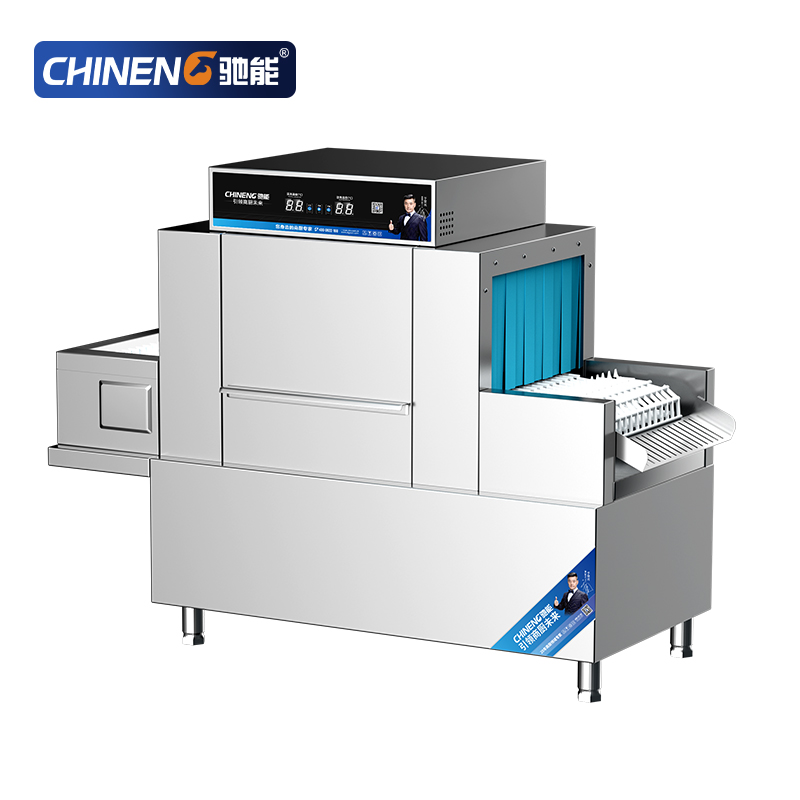
1.6m fully automatic dishwasher
Lid-top dishwasher (startup model)
Intelligent fully automatic steamed bun machine
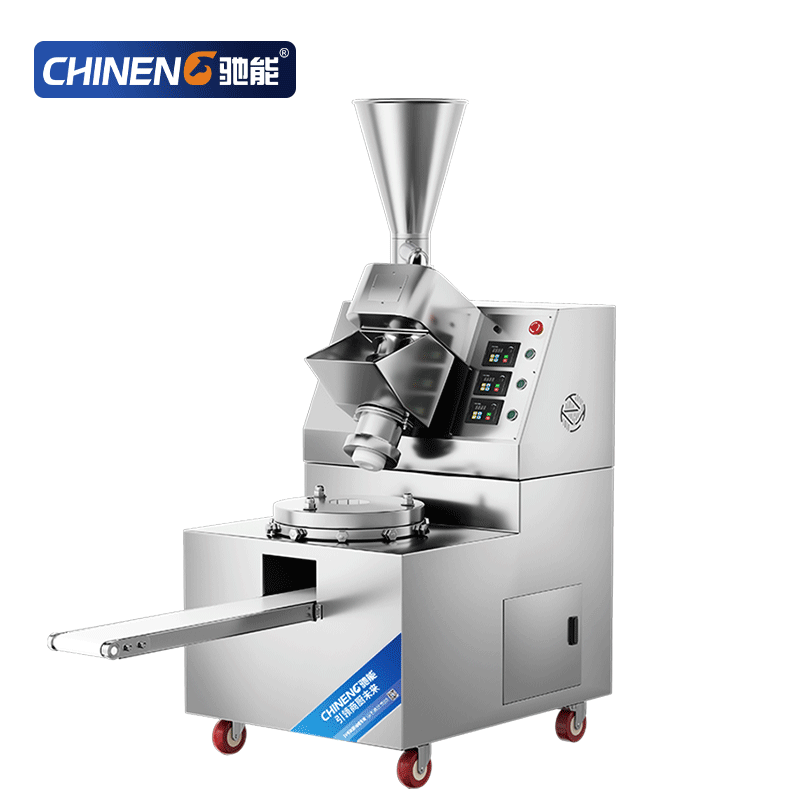
Fully automatic steamed bun machine [slanted surface]
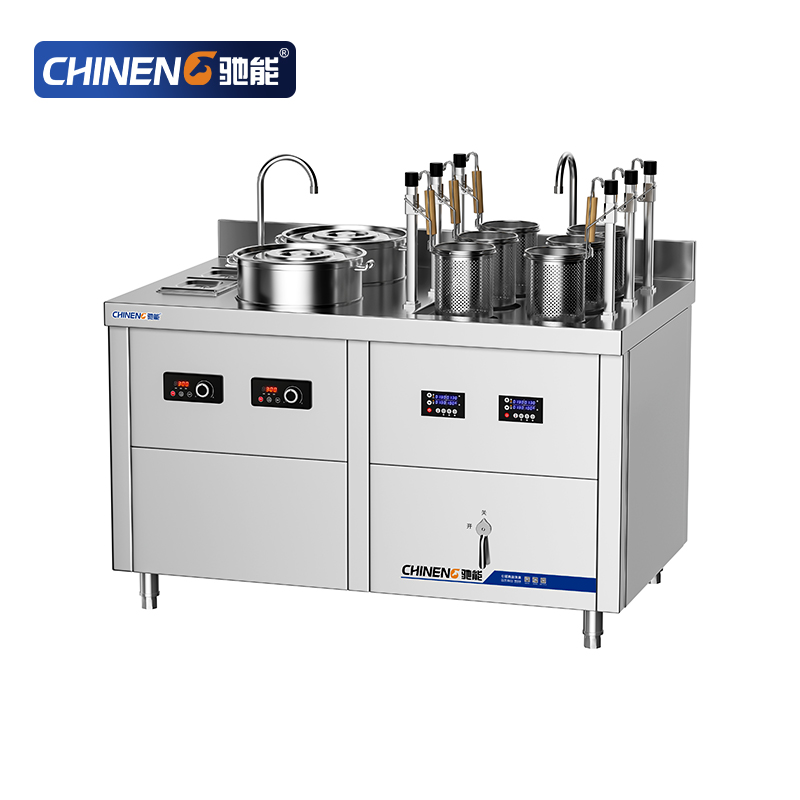
Automatic lifting noodle cooker + soup cooker combination
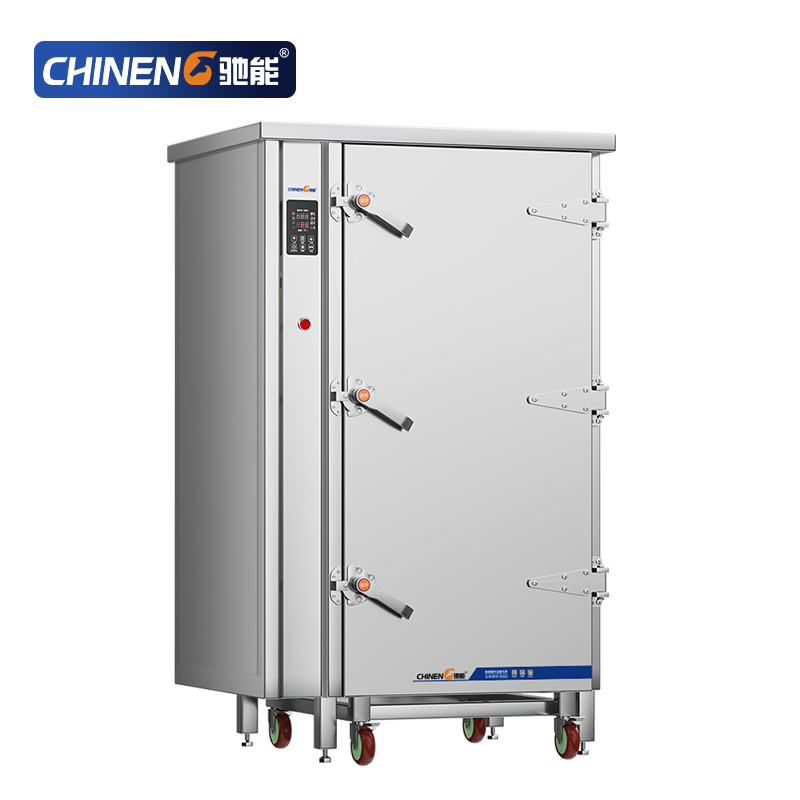
Single door trolley steam cabinet
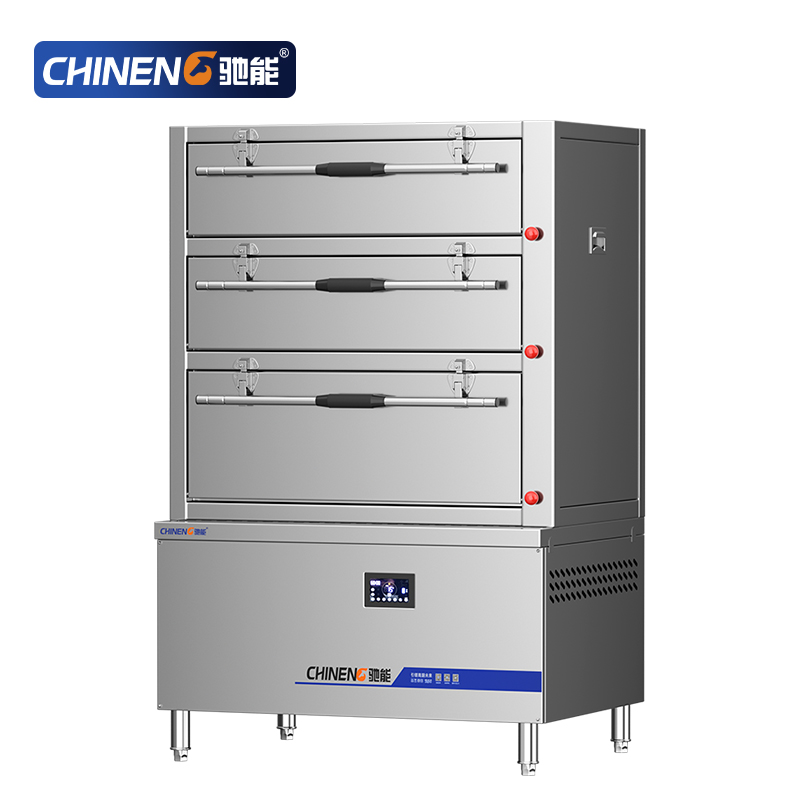
Seafood Steaming Cabinet [Smart Luxury Model]
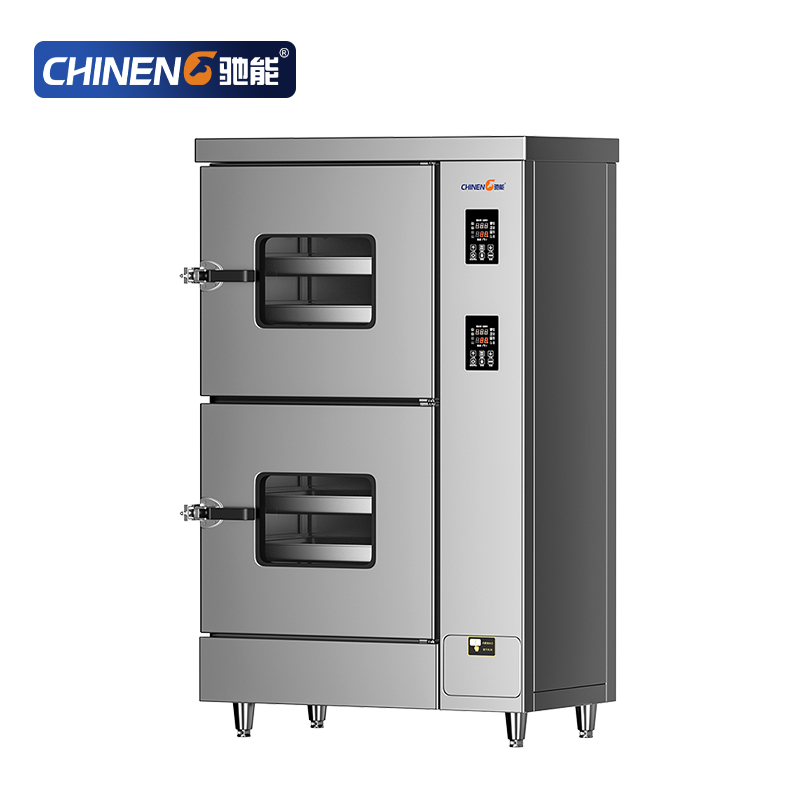
Smart multi-door steam cabinet
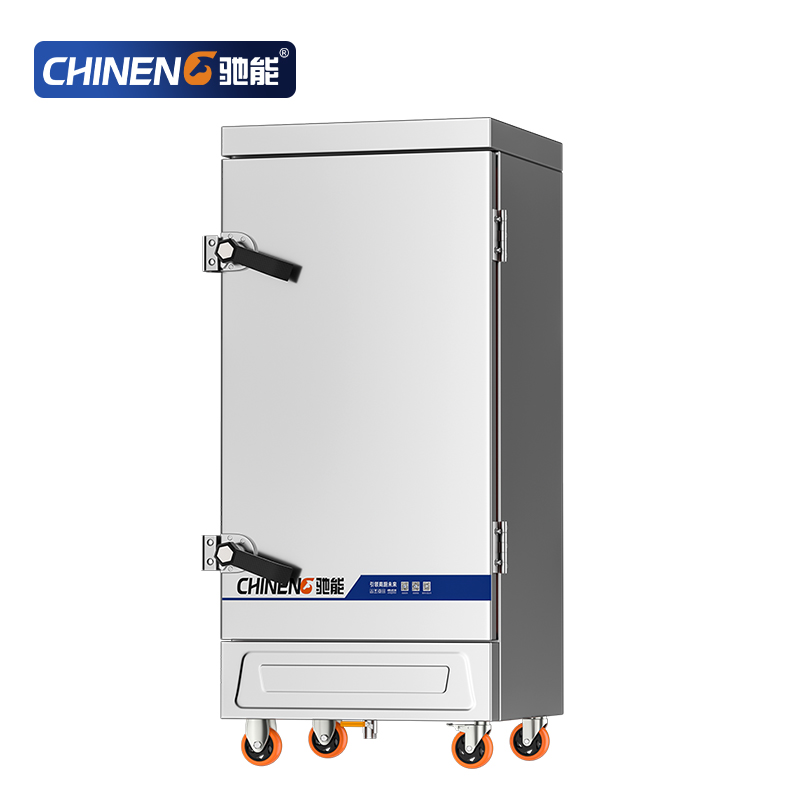
Rice Steamer [Startup Model]
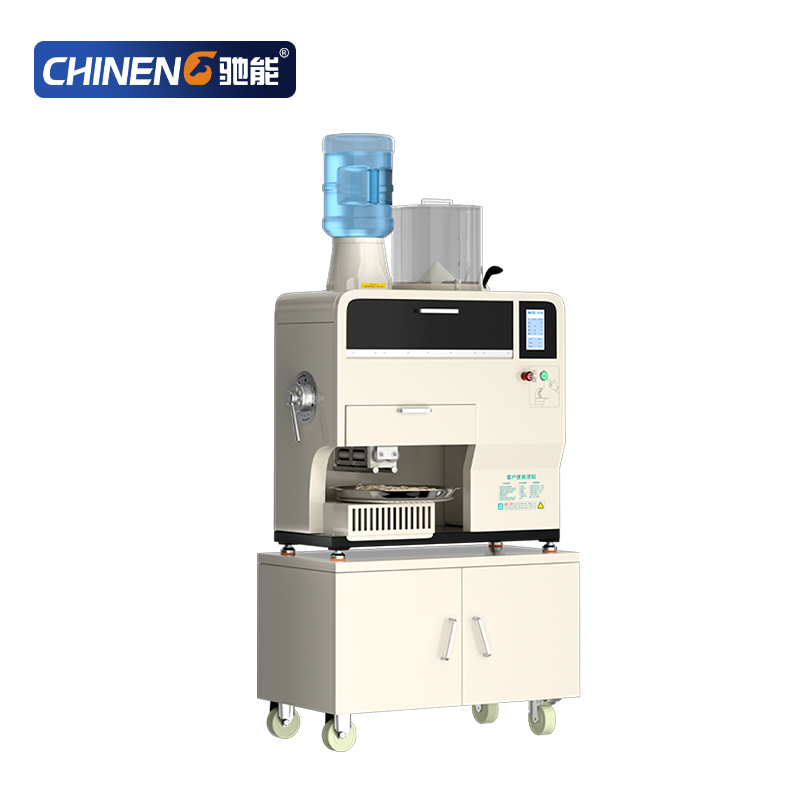
Fully automatic noodle machine
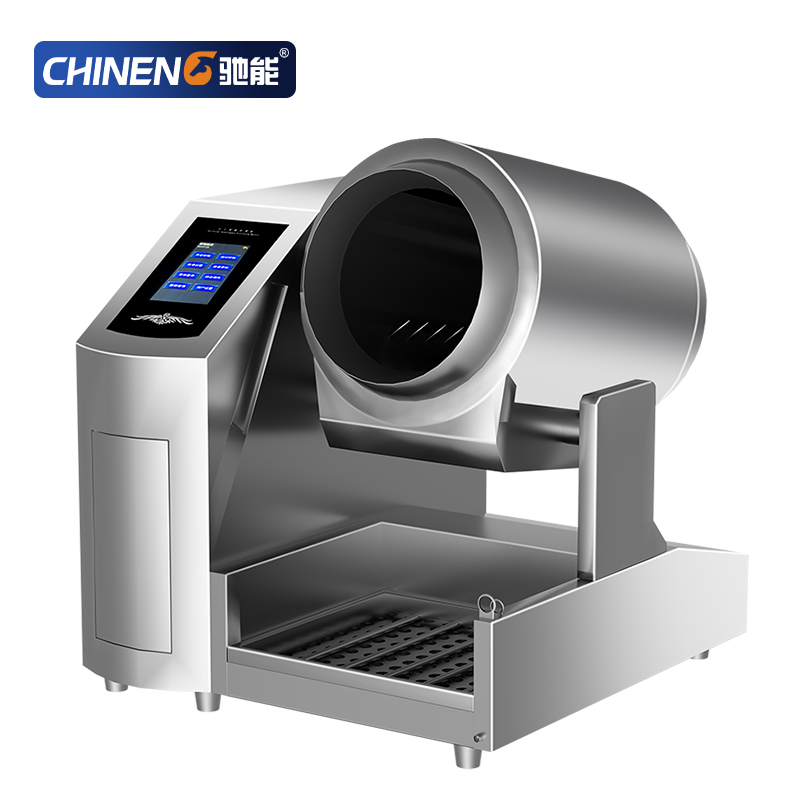
Canteen intelligent large automatic cooking machine
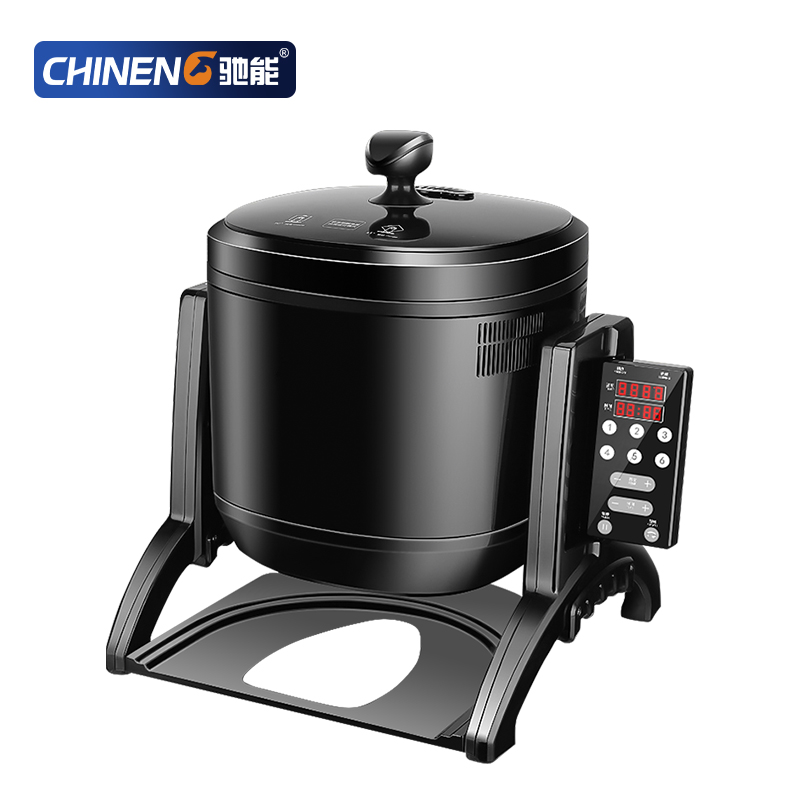
Small automatic cooking machine
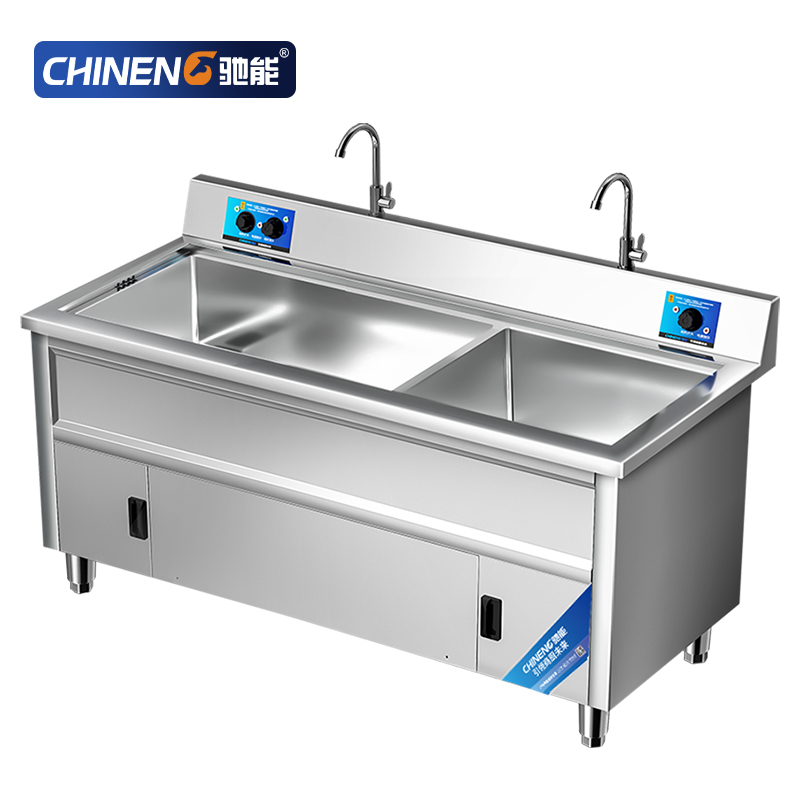
1.8m double tank ultrasonic dishwasher
Products


TikTok

China Chi Neng Commercial Kitchen
Group Address: Building 5, No. 1, Huyuewan District, Humen Town, Dongguan City, Guangdong Province, China
Factory Address: Building 2, No. 10 Jingye Middle Road, Liaobu Town, Dongguan City, Guangdong Province, China
Telephone:008615112885752
E-mail:kf@chineng55.com
Copyright ©2014-2026 Guangdong Jiushang Electronic Technology Co., Ltd.CHINENG Commercial Kitchen Equipment Manufacturer Factory
CHINENG Kitchen