Business Headlines
Delivering sincere shared knowledge
Commercial Kitchen Encyclopedia
Related columns:Business HeadlinesIndustry InformationCommercial Kitchen Encyclopedia
Practical Guide to Automatic Cooking Machines in Cafeterias: Three Types, Four Scenarios, and Key Selection Criteria
2026-10-08 09:24:36Back to list
Serving 1,000 people simultaneously with ten dishes and a soup, yet only three chefs—this is a daily arithmetic problem faced by almost every canteen kitchen. Traditional large-pot cooking relies on manual stirring, visual inspection, and feel; if a chef gets tired, the dishes deteriorate, and changing chefs disrupts the flavor. In recent years, more and more school, company, and government canteens have begun to introduce automatic cooking machines, entrusting the "stirring" to equipment and "seasoning" to the program. This article clarifies the commonly used automatic cooking machines in canteens: how to categorize the three main types, how to match them in four typical scenarios, which key parameters to consider when selecting a model, and how to maintain them in daily use, helping kitchen managers make a rational upgrade.
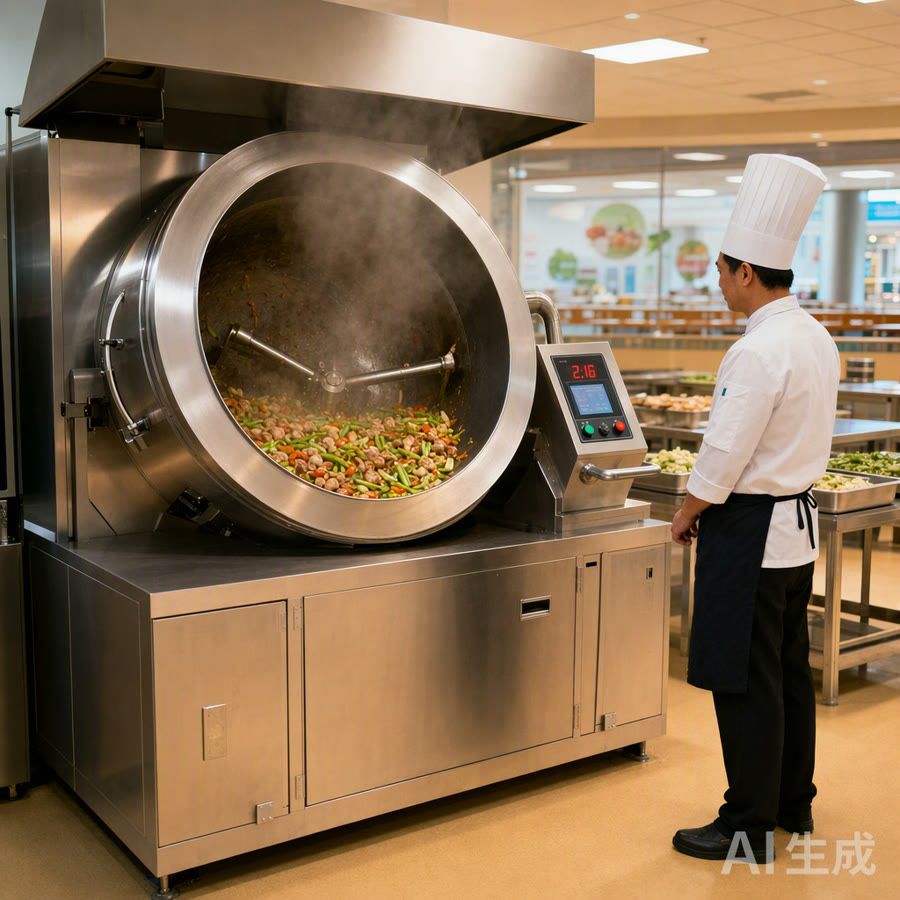
▲ Automated cooking machine in the cafeteria kitchen: One person can manage multiple machines, resulting in a more stable food preparation rhythm.
I. Why are cafeterias becoming increasingly reliant on automatic cooking machines?
Unlike restaurant stir-fries, the key words for canteens are "batch production, stability, and on-time delivery." These three points determine that the value of automatic cooking machines in canteen settings goes far beyond simply "saving a chef."
First of allHuman Resources StructureThe changes are significant. Experienced canteen chefs are becoming increasingly difficult to recruit, and young chefs have a high turnover rate. A canteen serving over a thousand people often needs five or six chefs to feed a single meal, and labor costs are rising year after year. Automated cooking machines delegate the functions of stir-frying, temperature control, and timing to the equipment, allowing an ordinary cook to manage two to three machines simultaneously, immediately reducing the workload by half.
followed byConsistency of dishesThe biggest drawback of traditional large-pot cooking is that the food can be "salty today and bland tomorrow," with different chefs producing vastly different results for the same dish. Automatic cooking machines, through programmed control of oil temperature, stirring speed, heating time, and ingredient order, produce a highly consistent taste for the same recipe each time it's cooked. This is especially important for school, company, and government canteens—diners crave a "familiar taste."
Third isFood safety and environmentThe enclosed or semi-enclosed stir-frying system reduces the escape of oil fumes, improving the kitchen environment; the programmed heating curve avoids harmful substances generated by localized overheating; and the stainless steel inner pot and removable, washable structure allow for more thorough cleaning. Fourthly...Food serving efficiencyA 60L automatic cooking machine can produce 30-50 dishes at a time. During peak meal times, it can run three or four rounds and stably support the dining needs of several hundred people.
II. Three Main Types of Automatic Cooking Machines Used in Canteens
There are all sorts of devices on the market that claim to be "automatic cooking machines," but in the context of a canteen, there are actually only three main types that are truly usable, each with its own strengths.
1. Drum-type fully automatic cooking machine—The main force of communal cooking
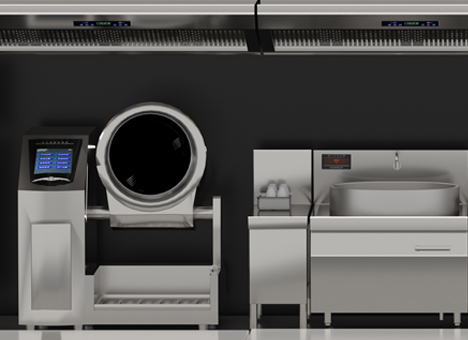
Drum-type automatic cooking machines are currently the most common type found in canteens. The core structure is a rotating stainless steel drum. Through a combination of external heating (electric or gas), drum rotation, and internal stirring teeth, it achieves "stir-frying while turning." The ingredients tumble continuously inside the drum, ensuring even heating and preventing scorching. It is particularly suitable for stir-frying leafy greens, root vegetables, simple stir-fries, and dishes with a mix of meat and vegetables.

▲ Drum-type automatic cooking machine: Ingredients are continuously tumbled in the drum, ensuring even heating and making it suitable for large-volume home-style cooking.
Drum-type machines typically range in capacity from 30L to 120L, and can process 50-200 servings at a time. Their advantages include a texture similar to hand-stirred dishes, relatively simple equipment structure, and low failure rate. The disadvantage is that the "tumbling" motion limits the cooking process, making them less suitable for dishes requiring the preservation of whole fish or chicken.
2. Multi-functional mixing and frying pan/stewing machine—A versatile pot with multiple uses
The mixing wok (also called a planetary mixing wok or jacketed kettle mixer) uses a fixed pot body + planetary mixing paddle structure. The mixing paddle moves in a planetary motion along the bottom and sides of the pot, allowing for stir-frying, stewing, boiling, making sauces, and soups. Compared to drum mixers, it has a larger capacity (80L, 150L, and 300L are common), making it more suitable for dishes that require long-term mixing, such as stewing meat, braising, making sauces, porridge, and large-pot stews.
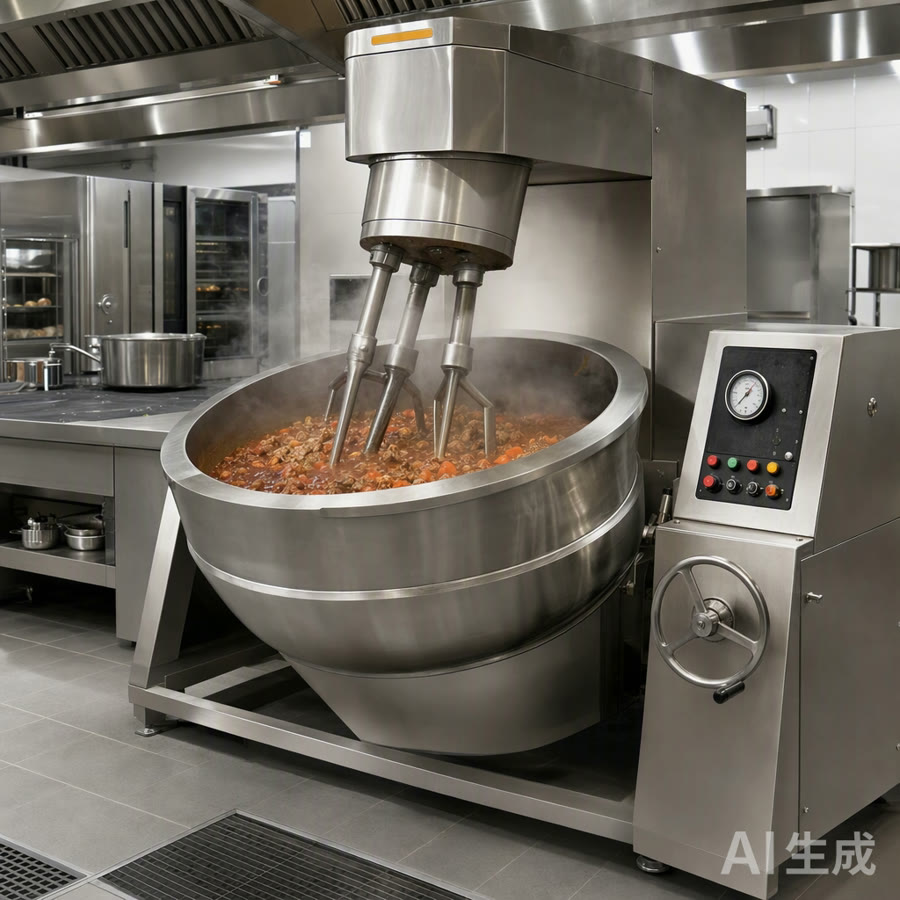
▲ Multi-functional Stirring Wok: The planetary stirring paddle keeps the pot moving and can be used for stir-frying, stewing, and boiling. It is the mainstay of the canteen's "one pot, multiple uses" system.
The value of a mixing wok in a canteen setting lies in its ability to "fill in" multiple tasks. One machine can simultaneously handle stewing, braising, porridge making, and sauce stir-frying, reducing the types of equipment and simplifying kitchen workflow. In terms of heating, steam jacketing is gentler and more even than electric heating, making it particularly suitable for dishes that require long simmering times.
3. Intelligent cooking robot—Store the recipe into the machine
Intelligent cooking robots are high-end models that have rapidly gained popularity in the last five years. They typically feature cloud-based recipe libraries, precise weighing, automatic ingredient addition, multi-stage temperature control, automatic unloading, and self-cleaning capabilities. They are more like a "programmable kitchen workstation": breaking down the preparation of a dish into a combination of parameters such as temperature, time, ingredient order, and stir-frying intensity, allowing for one-time setup and permanent reuse.
The value of intelligent cooking robots in canteens lies in two aspects: first, "digitalizing recipes," which converts the chef's skills into programs, ensuring consistent quality even with changes in personnel; and second, "multi-category switching," allowing a single machine to prepare five or six different dishes consecutively within a single meal, with automatic cleaning in between, making it particularly suitable for scenarios with frequently changing menus. However, the disadvantages are also obvious—high unit price, time required for recipe debugging, and high requirements for power supply and exhaust systems.
Matching suggestions for three or four typical canteen scenarios
Different canteens vary greatly in the number of diners, the menu, the budget, and the operational capabilities, so equipment selection cannot be generalized.
School cafeterias (primary and secondary schools/universities)The menu mainly consists of home-style stir-fries, stews, and large-pot medleys, requiring fast service, consistent taste, and high food safety standards. A fully automatic drum-type stir-fry machine is recommended as the primary unit, supplemented by 1-2 mixing woks for stews and porridge. Given the concentrated mealtimes at schools and the high intensity of continuous equipment operation, priority should be given to the material (304 or 316 food-grade stainless steel), protection level, and ease of cleaning when purchasing equipment. University canteens offer diverse cuisines, and the introduction of intelligent stir-fry robots as a specialty feature could be appropriate.
Company/Government CanteenThe menu is more diverse than in schools, requiring a balance between catering to diverse employee tastes and keeping costs under control. A combination of a drum-type cooking machine, a stirring wok, and a small number of intelligent cooking robots is recommended. Corporate canteens often have "light meal windows" or "local specialty windows," where the menu-switching capabilities of intelligent cooking robots are perfectly suited.
Hospital/Nursing Home CafeteriaThe hospital canteen requires low-oil, low-salt, easily digestible soft foods and stews, with a relatively slow serving pace but high nutritional balance. Steam-heated stirring woks are recommended for slow cooking and precise temperature control; supplemented by small-capacity drum cookers for small-batch stir-frying. Hospital canteens should also pay attention to the quietness and ease of cleaning of the equipment.
Central kitchen / group meal deliveryFor scenarios involving large single-batch production volumes, numerous SKUs, and the need for long-distance delivery followed by reheating, a large-capacity mixing wok (150L or more) combined with multiple intelligent cooking robots is recommended to form a group meal production line integrating "digital recipes" and "large-scale production." These scenarios place the highest demands on equipment stability, energy efficiency, and after-sales response speed.
IV. Six Key Parameters to Consider When Selecting a Model
When applying the above scenario to a specific device model, six parameters determine whether the device is suitable or not.
First isPot capacity and single outputTo estimate the number of diners, divide the number of servings per pot by the number of shifts: For a canteen of 500 people, a 60L-80L machine is suitable, assuming 50 servings per pot and 2-3 shifts per meal; for more than 1000 people, a 100L machine is recommended as a starting point.
The second isHeating method and powerElectric heating is easy to install and provides precise temperature control, making it suitable for locations with ample power supply; gas heating heats up quickly and consumes little energy, but requires flue gas and gas supply; steam jacket heating provides gentle and even heating, suitable for stewing, but requires boiler room support.
Third isStirring/stirring structureFor drum-type mixers, check if the drum speed is adjustable and if the stirring teeth are detachable and washable; for stirring woks, check if the stirring paddle sticks to the wok and if there are scraping rubber strips on the bottom; for intelligent robots, check the quantity of feed hoppers and the accuracy of automatic weighing.
Fourth isProgram and recipe capabilitiesLow-end models only have a few preset menu levels, mid-range models can store 20-50 recipes, and high-end models support cloud downloads and custom programming. The higher the frequency of menu changes in the cafeteria, the greater the need for powerful recipe storage capabilities.
The fifth isEase of cleaningCheck if the pot can be tilted to pour food, if the inner pot is removable, if it has a self-cleaning program, and if the corners are prone to accumulating dirt. The difficulty of cleaning directly determines the lifespan of the equipment and the hygiene of the kitchen.
The sixth isManufacturer service and supportCheck if the manufacturer can provide selection consultation, kitchen engineering support, on-site installation and commissioning, operation training, and after-sales response time. If canteen equipment stops operating, it affects the meals of the entire unit; the service network is just as important as the equipment itself.
V. Key Points for Daily Use and Maintenance
Buying the equipment is only the first step; the key is to ensure it lasts and functions reliably. The daily maintenance of the automatic cooking machine in the cafeteria can be summarized as "three checks, two washes, and one record."
The "three checks" are to check the power line, the tightness of the stirring parts, and the cleanliness of the temperature control probe before starting the machine every day; the "two washes" are to clean the inner pot and stirring paddle after each meal and to deeply clean the heating chamber and exhaust port every week; and the "one record" is to establish a logbook for equipment use, recording the daily dishes, running time, abnormal situations, and maintenance records to facilitate traceability and preventive maintenance.
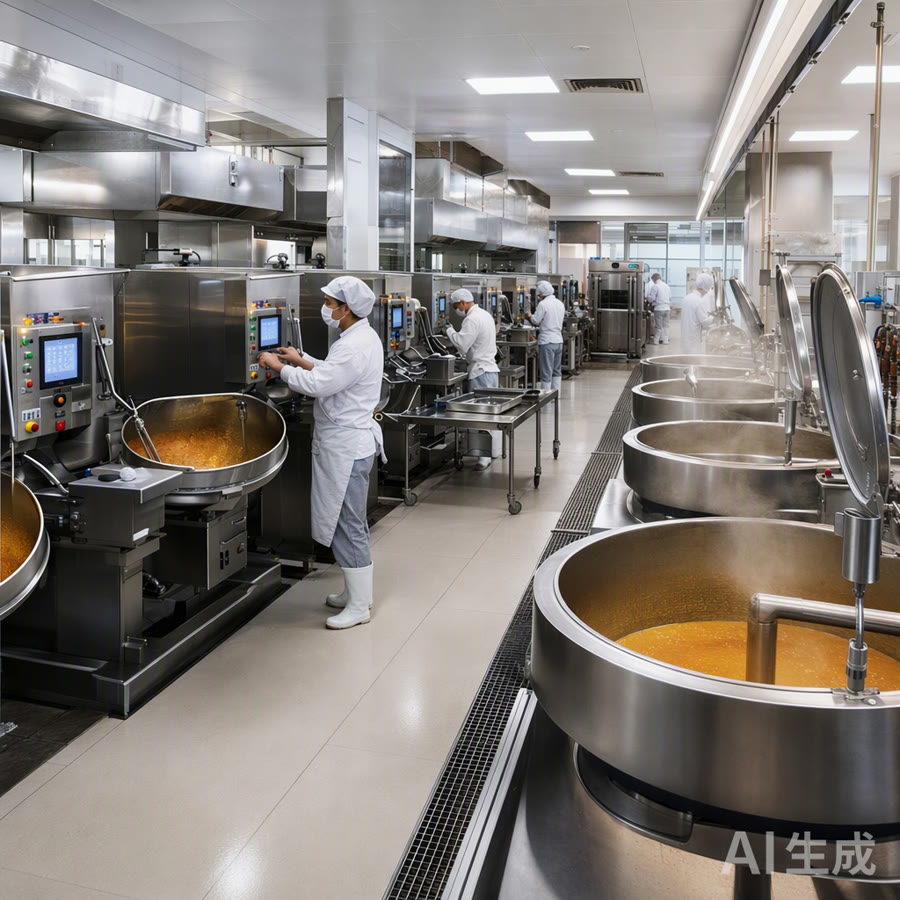
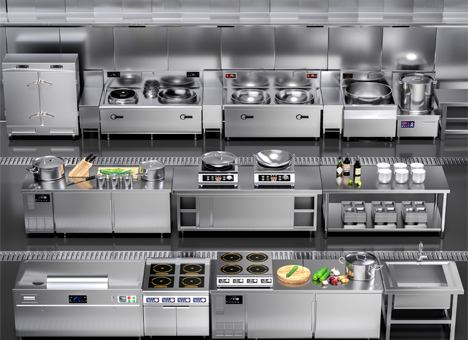
▲ Modern canteen kitchen: Multiple automatic cooking machines work together to form a stable, large-scale food preparation capacity.
In addition, three points should be noted: First, the order of adding ingredients should be strictly followed according to the recipe, especially the timing of adding leafy vegetables and seasonings; second, when debugging a new recipe for the first time, use a small batch to test the cooking process, and only increase the quantity after confirming that the temperature, time, and stirring speed are appropriate; third, if the equipment has been idle for more than a week, it should be preheated by running it idle and the lubrication points should be checked before restarting it.
Conclusion: Transforming "difficult-to-cook mass-produced meals" into "standardized meal preparation"
Automatic cooking machines in canteens don't "replace" chefs; rather, they free them from repetitive wok-flipping tasks, allowing them to focus on more experience-intensive areas like recipe development, flavor control, and ingredient inspection. With the right type, suitable scenario, accurate parameters, and proper maintenance, an automatic cooking machine can reliably serve a canteen for five to eight years, becoming the kitchen's most reliable "colleague."
CHINENG Commercial Kitchen Equipment, a subsidiary of Guangdong Jiushang Electronic Technology Co., Ltd., was founded in Dongguan in 2014. It is a large-scale manufacturer of commercial kitchen equipment in China, boasting six production bases and seven product lines. Its intelligent commercial kitchen equipment line, developed and manufactured by its dedicated intelligent kitchen factory, encompasses various models including large-scale automatic cooking machines for canteens (such as CN-MLD-GB60-CPDD) and multi-functional mixing and frying pans/stewing machines (such as CN-MLD-QXC80-ZDJB-CPPL). These products are widely used in school canteens, corporate and government canteens, hospital and nursing home canteens, and central kitchens. CHINENG products are CE certified and exported to the United States, Germany, Southeast Asia, and other countries and regions. Adhering to the brand philosophy of "environmentally friendly and energy-saving, intelligent and efficient," CHINENG provides customers with a one-stop commercial kitchen solution, from equipment selection and kitchen engineering design to installation, commissioning, operation training, and after-sales maintenance. If you are worried about the stability of your canteen's food service and manpower pressure, consider starting with a professional selection consultation to ensure the equipment truly suits your canteen needs.
For more information, please follow Chi Neng Shang Chu Ge WeChat

Next: No more
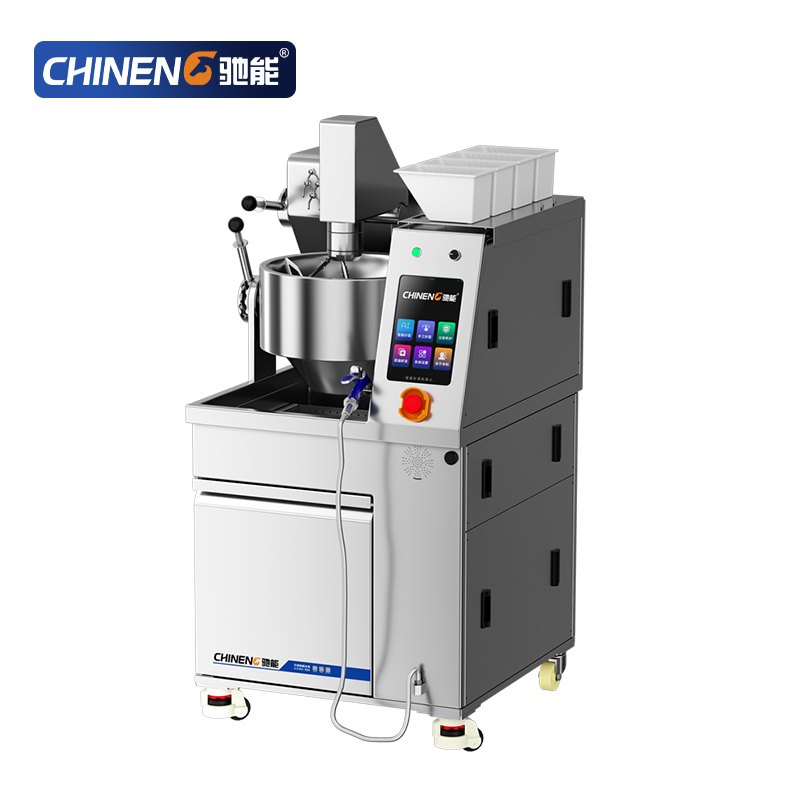
Intelligent automatic cooking machine
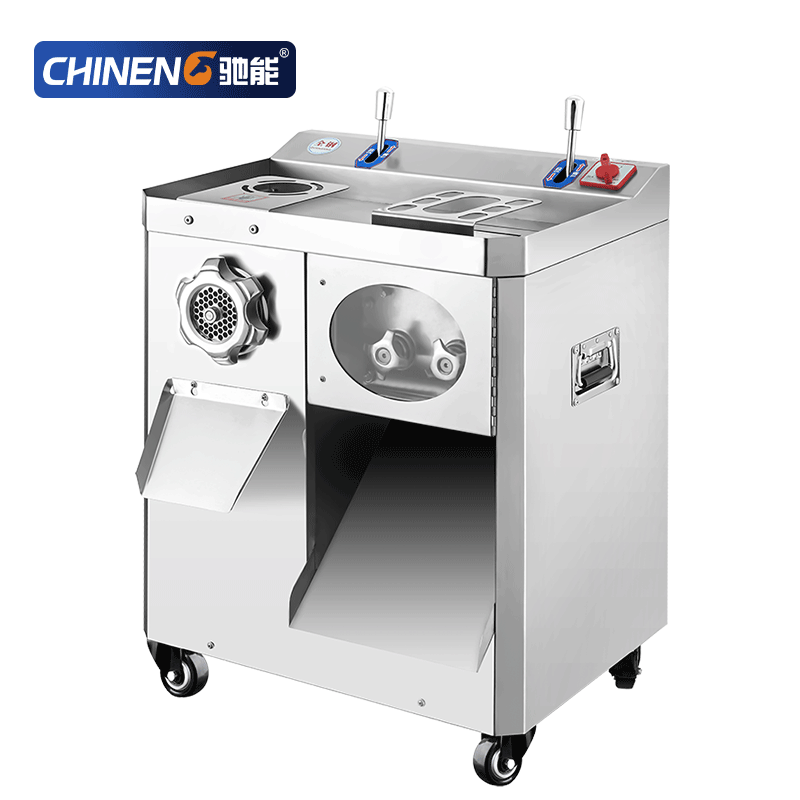
Commercial meat grinder
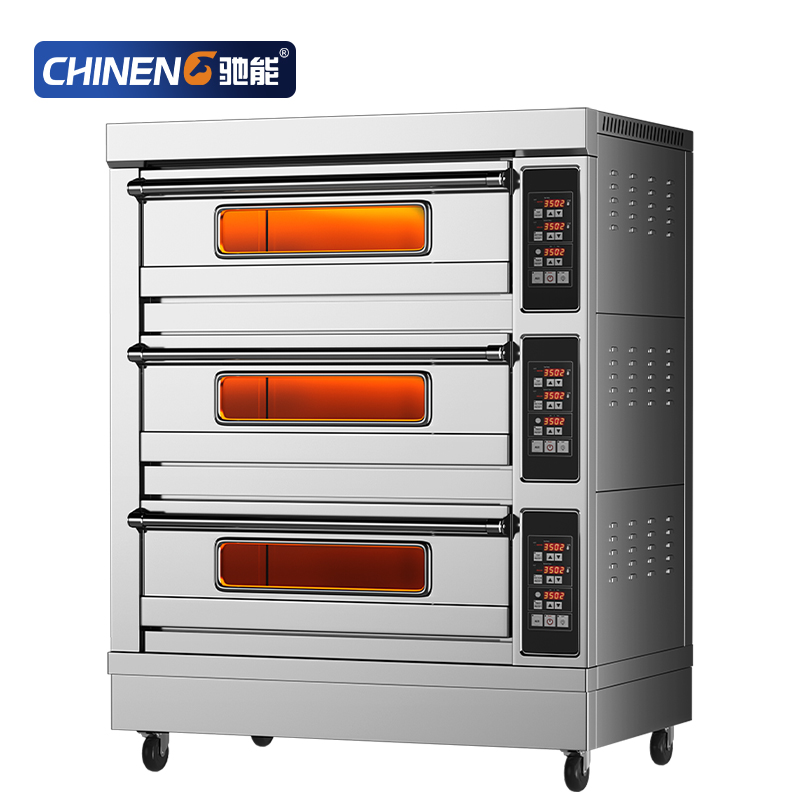
Commercial Electric Oven [Computer Type]
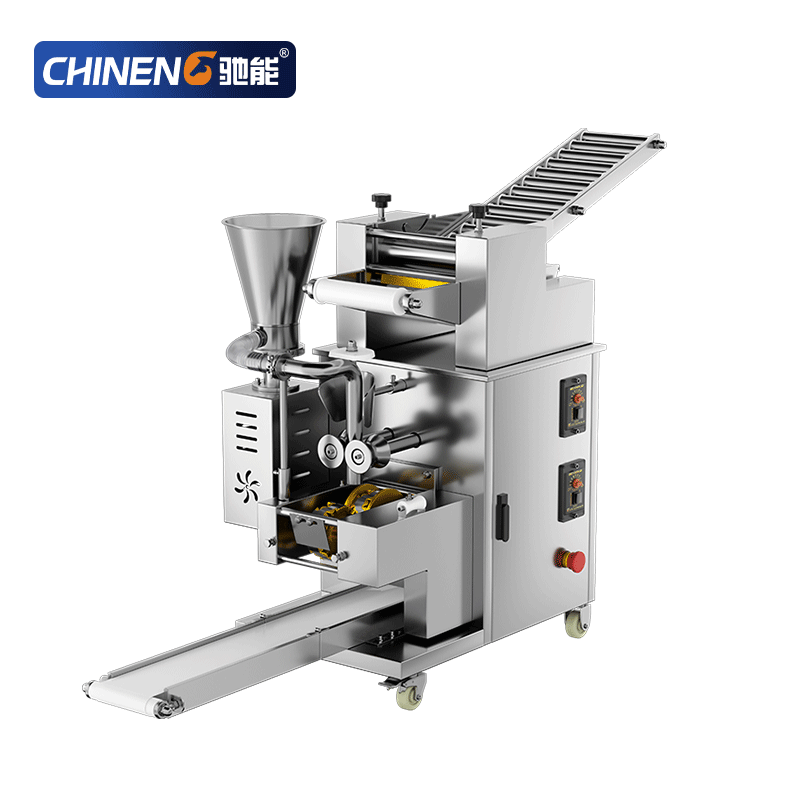
Imitation handmade dumpling machine
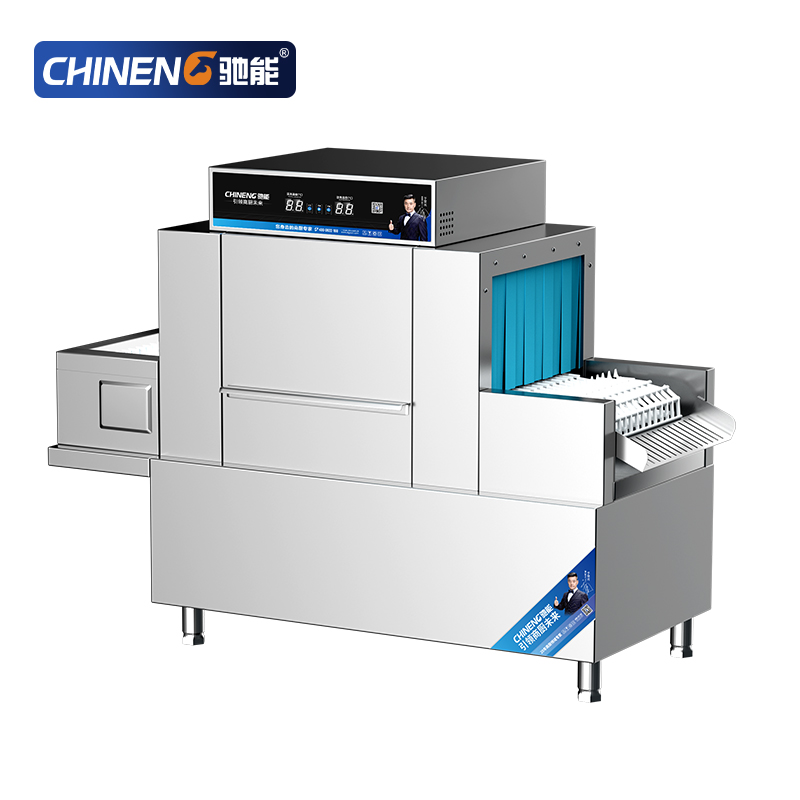
1.6m fully automatic dishwasher
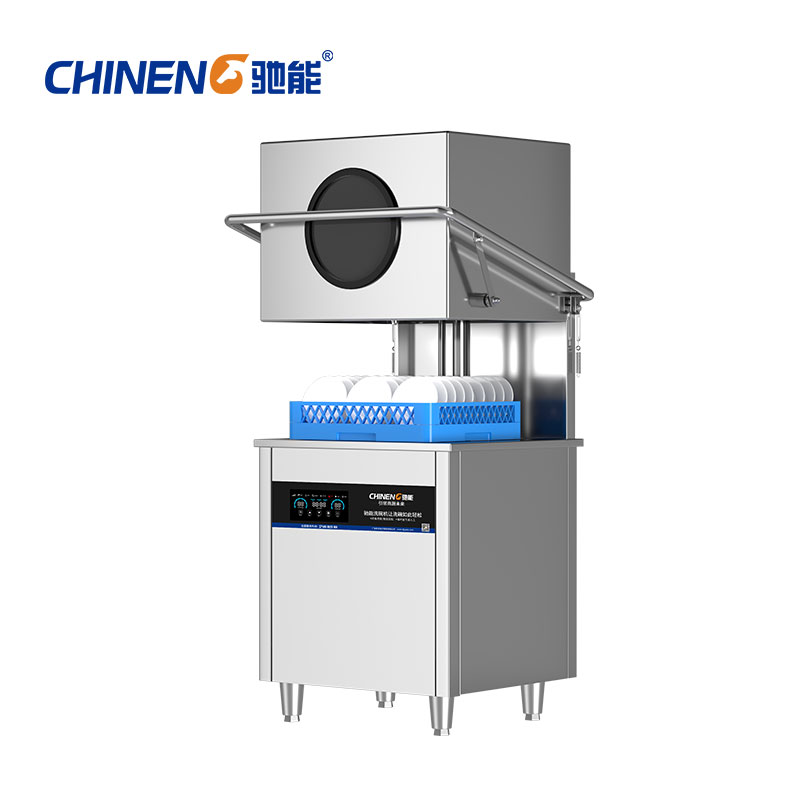
Lid-top dishwasher (startup model)
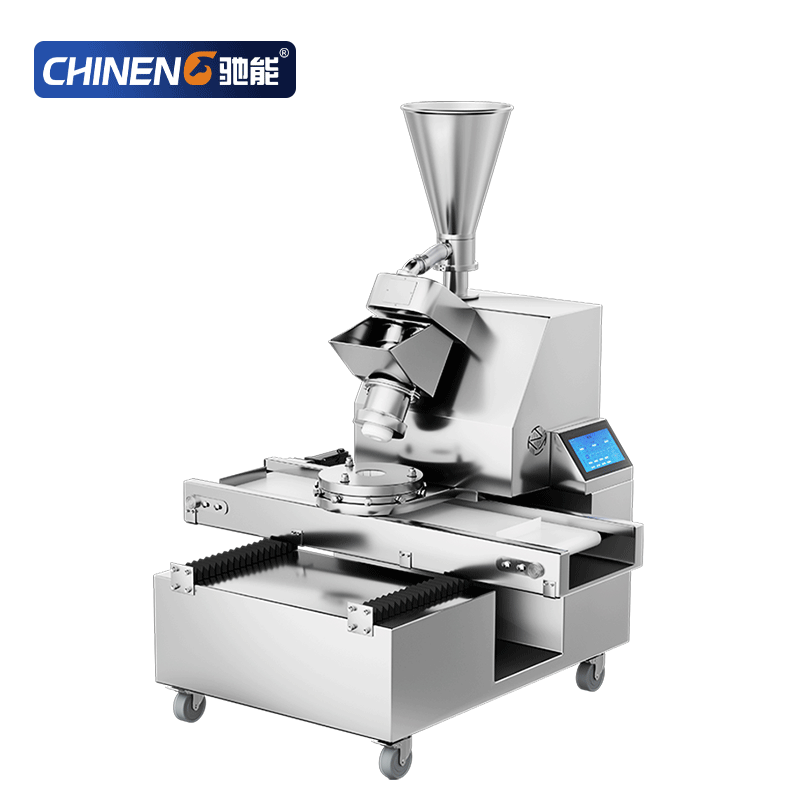
Intelligent fully automatic steamed bun machine
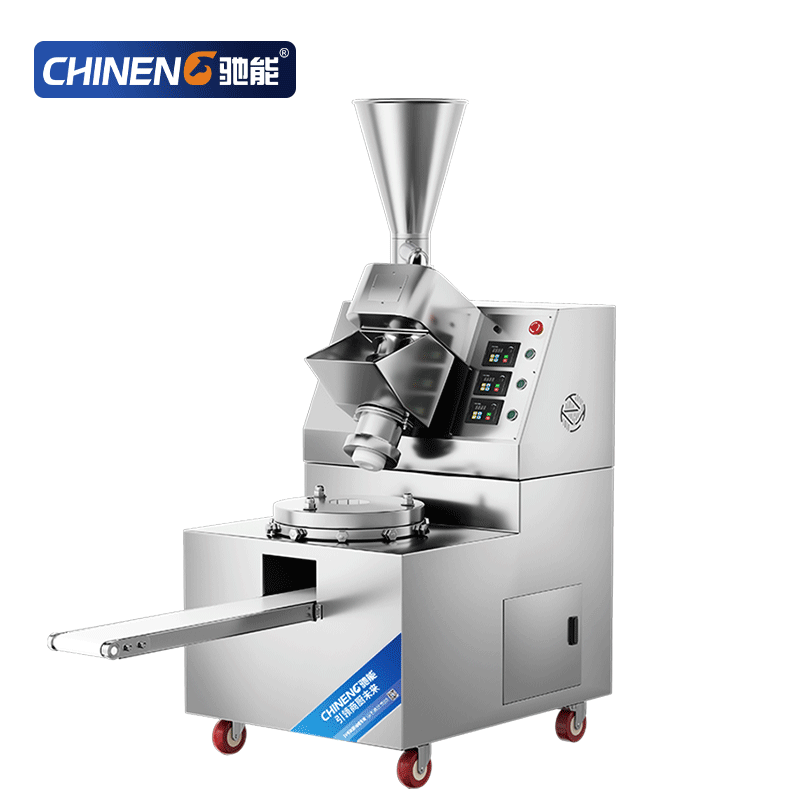
Fully automatic steamed bun machine [slanted surface]
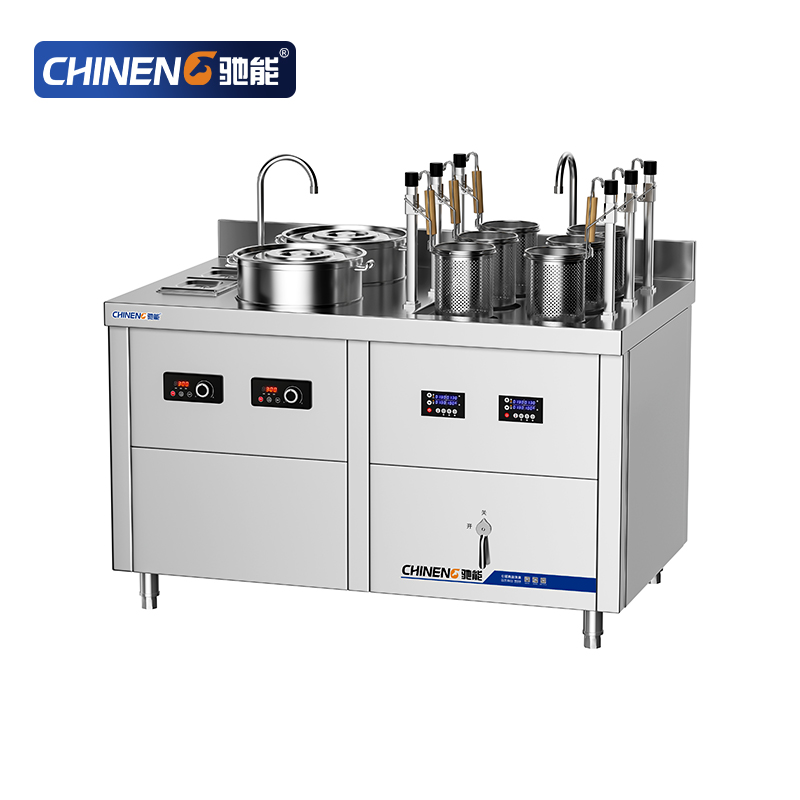
Automatic lifting noodle cooker + soup cooker combination
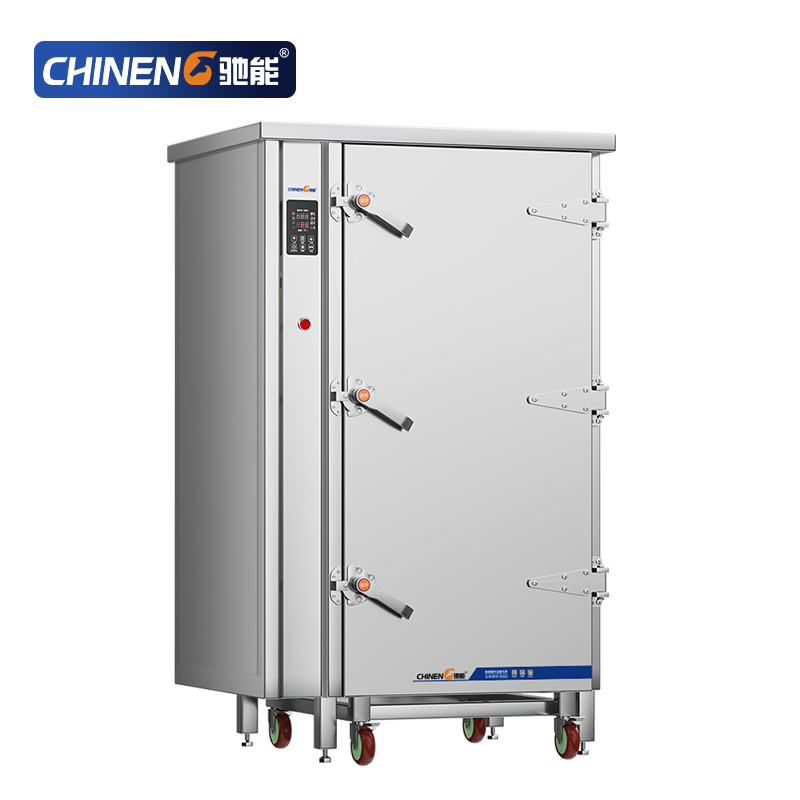
Single door trolley steam cabinet
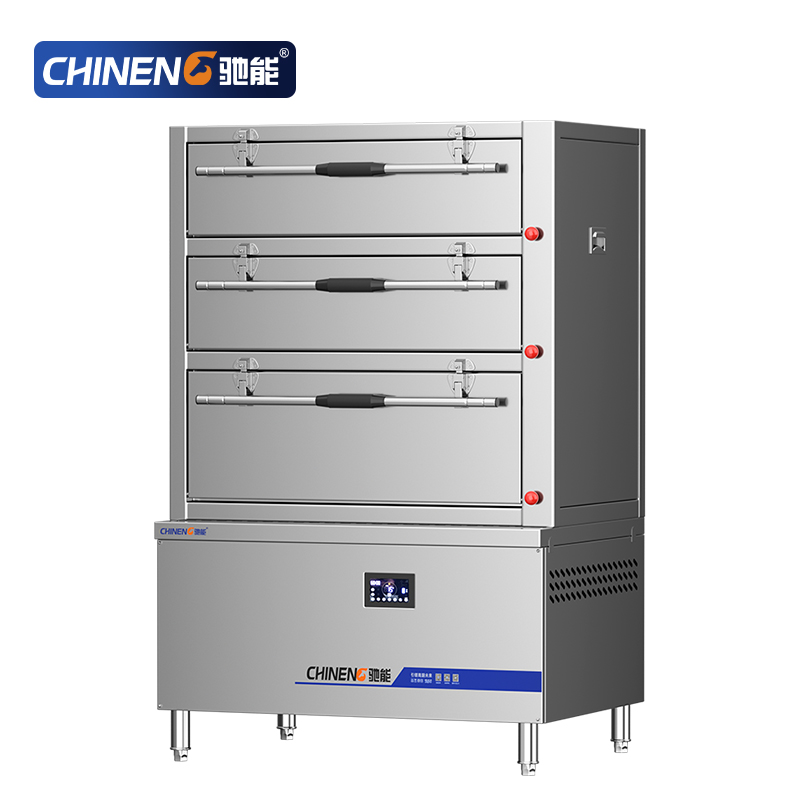
Seafood Steaming Cabinet [Smart Luxury Model]
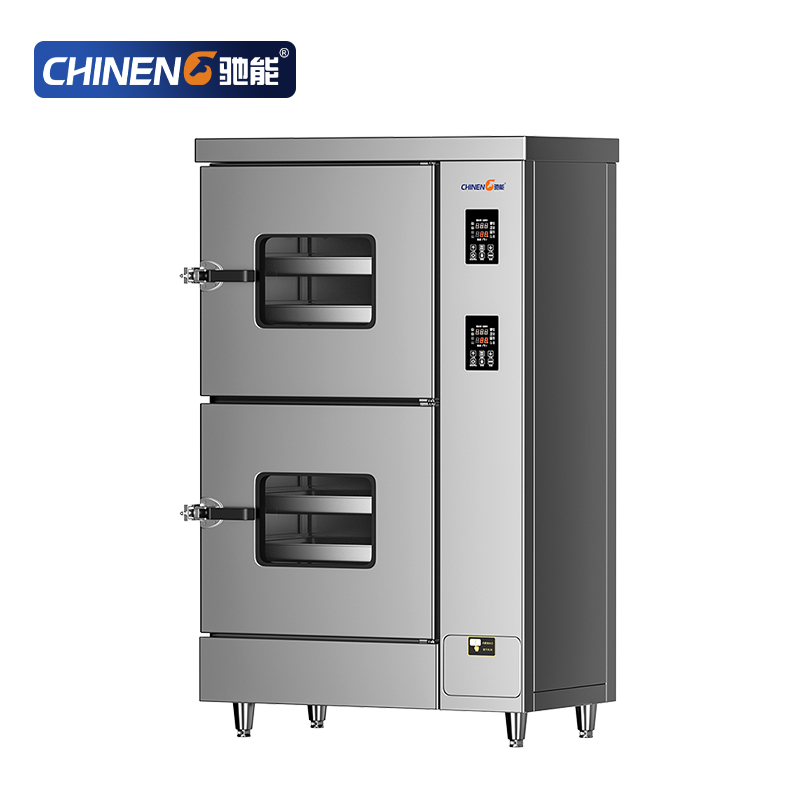
Smart multi-door steam cabinet
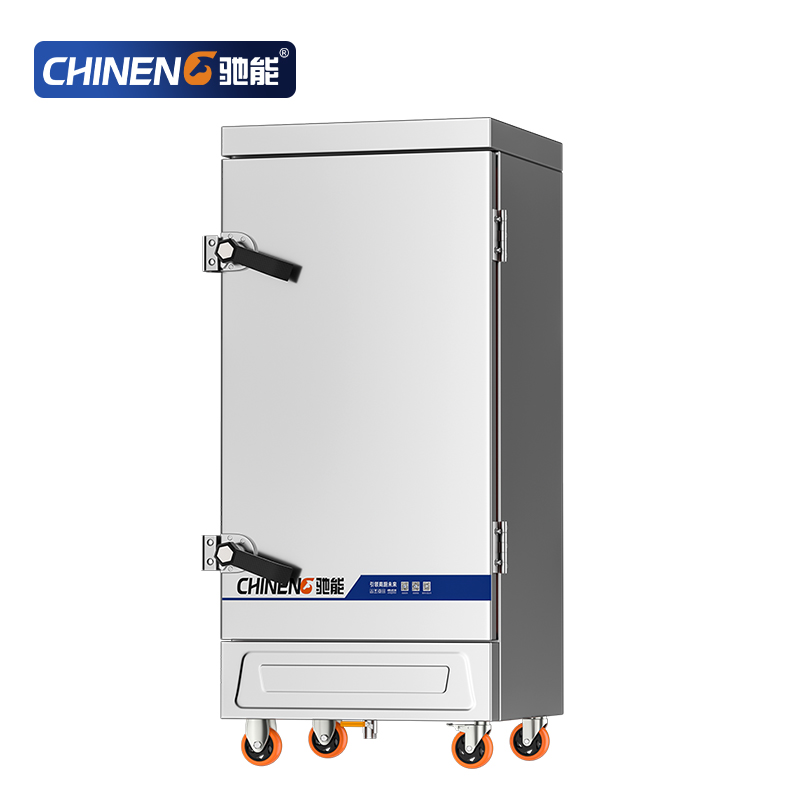
Rice Steamer [Startup Model]
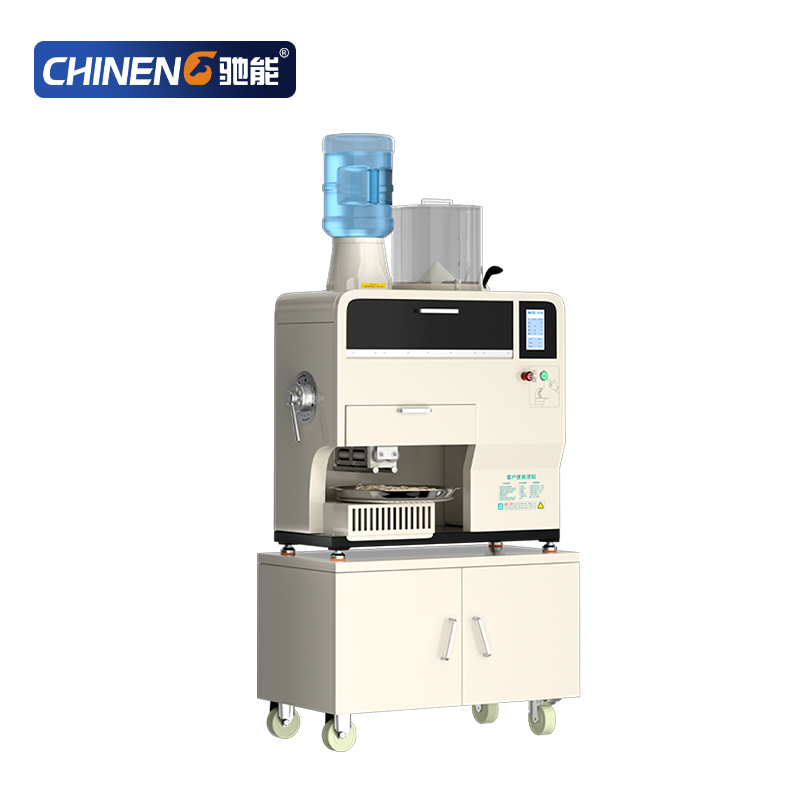
Fully automatic noodle machine
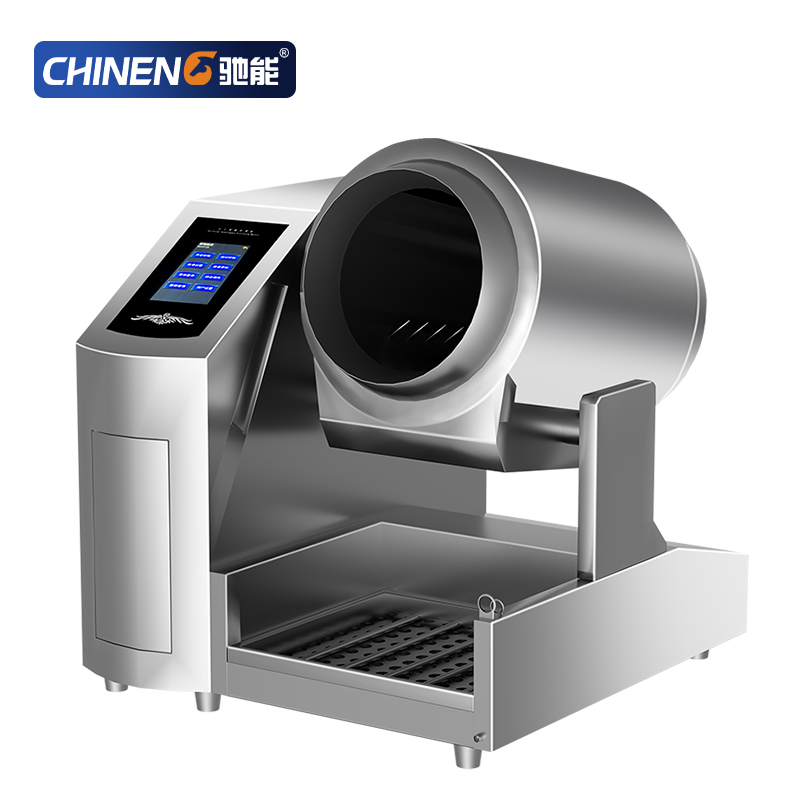
Canteen intelligent large automatic cooking machine
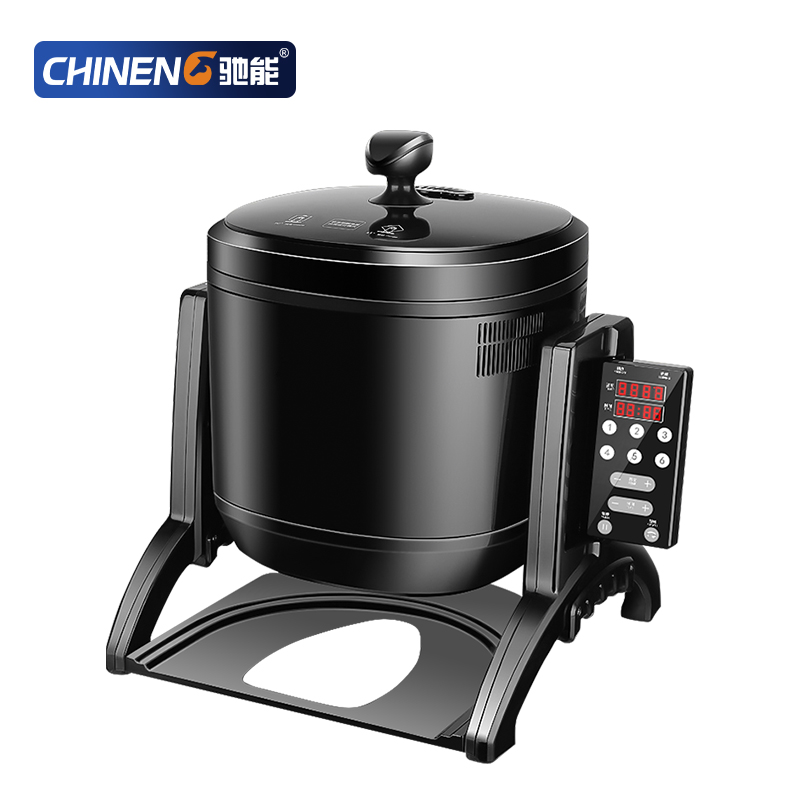
Small automatic cooking machine
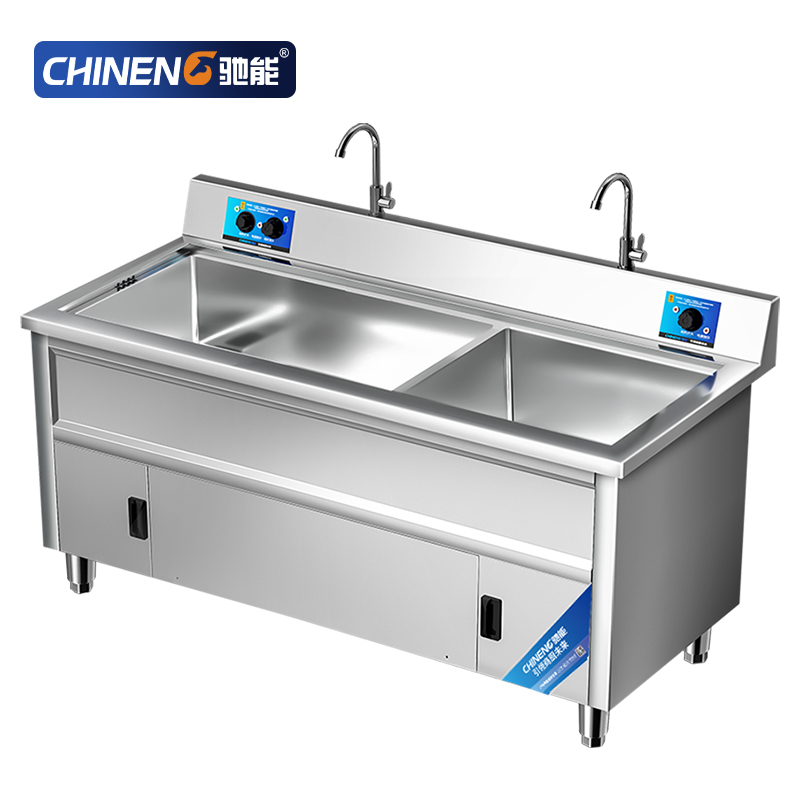
1.8m double tank ultrasonic dishwasher
Products

TikTok

China Chi Neng Commercial Kitchen
Group Address: Building 5, No. 1, Huyuewan District, Humen Town, Dongguan City, Guangdong Province, China
Factory Address: Building 2, No. 10 Jingye Middle Road, Liaobu Town, Dongguan City, Guangdong Province, China
Telephone:008615112885752
E-mail:kf@chineng55.com
Copyright ©2014-2026 Guangdong Jiushang Electronic Technology Co., Ltd.CHINENG Commercial Kitchen Equipment Manufacturer Factory
CHINENG Kitchen