Say goodbye to "human wave tactics" and increase efficiency by more than ten times.
In the past, washing the dishes for 2,000 people might have required a dishwashing team of 10-12 people, taking several hours. This was not only costly in terms of labor but also inefficient and could easily cause difficulties in the turnover of dishes during peak dining hours.
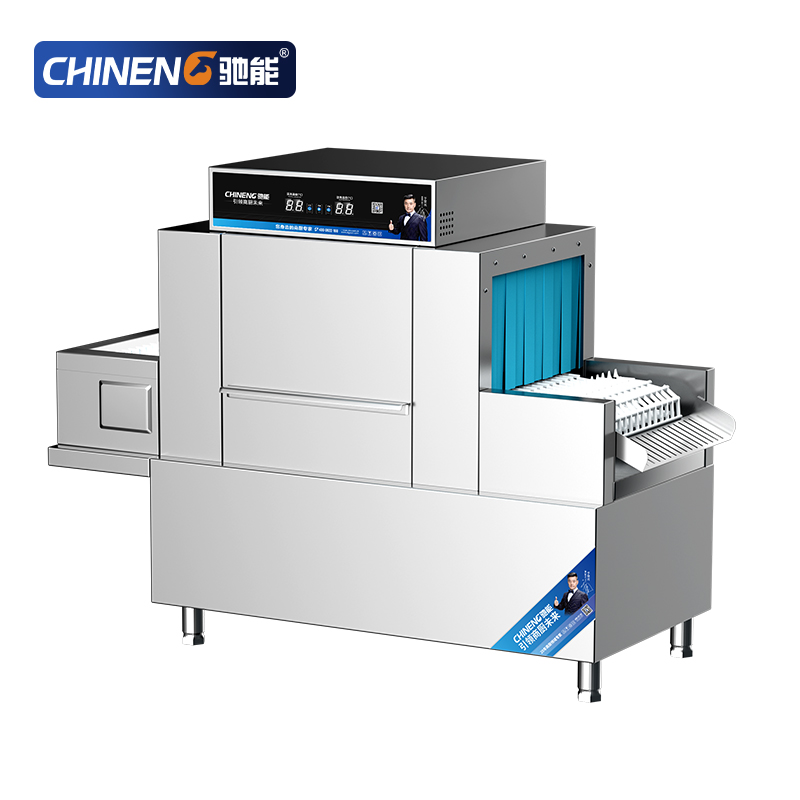
Now, a Chi Neng Changlong dishwasher can easily handle it!
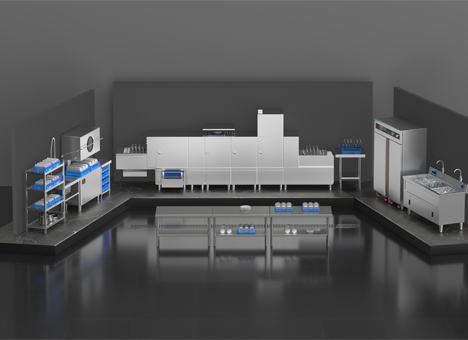
* Amazing throughputThis equipment, designed specifically for canteens serving over a thousand people, can process up to 4,000 sets of tableware per hour! This means that, theoretically, all the tableware for 2,000 people can be cleaned, disinfected, and dried in less than an hour. * Minimal staffingNo longer is a large dishwasher team needed. Only 2-4 staff members are required to simply remove food scraps from the collected dishes, place them in the conveyor belt inlet, and collect them at the outlet. The machine will automatically handle all the heavy and repetitive washing tasks. * Uninterrupted continuous operationThe long queue design means that tableware can be continuously fed in, washed and used immediately, which greatly improves the turnover rate of tableware and can easily cope with any peak dining period.
Four-step purification process to safeguard food safety
Behind its high efficiency lies a scientifically rigorous cleaning and disinfection process. The Chineng Longlong dishwasher ensures that every piece of tableware meets hygiene standards through four core steps.
1. Pre-washing and soaking to remove residue The first stop for dishes after they enter the machine is the pre-wash zone. A strong water flow washes away most food residue, while the soaking function softens stubborn stains, preparing the machine for a deep clean. This not only reduces the workload of the main wash but also saves water and energy.
2. High-temperature main wash for powerful stain removal Next, the dishes enter the high-temperature main washing zone at 60-70℃. At this temperature, the grease is effectively dissolved, and with the 360° scrubbing of the high-pressure spray arm, both greasy plates and rice bowls covered with grains of rice can be thoroughly cleaned.
3. High-temperature rinsing for deep disinfection This is a crucial step in ensuring food safety! The machine uses clean, high-temperature hot water above 82℃ to perform a final rinse on the tableware. This temperature is sufficient to kill most common bacteria, achieving deep physical disinfection without the need for additional chemical disinfectants, thus meeting stringent food safety regulations.
4. Hot air drying eliminates secondary pollution The washed, damp tableware immediately enters the drying area. A powerful hot air circulation system quickly dries the surface moisture, achieving a dryness level of over 95%. This dry environment effectively inhibits bacterial growth, preventing water stains and odors from developing during storage, ensuring the tableware is ready to use immediately.
Let's do the math: cost reduction and efficiency improvement are visible.
Introducing such a device not only solves the "how to wash" problem, but is also a shrewd investment.
* Save labor costsReducing the workforce from a dozen or so to just a few results in a considerable amount of savings in wages each year. * Reduce water and electricity consumptionCompared to traditional manual washing, professional commercial dishwashers have a water recycling system that can save more than 60% of water, and their overall energy consumption is far lower than people imagine. * Reduce tableware wasteMachine cleaning avoids the bumps and knocks that occur during manual handling and washing, greatly reducing the breakage rate of tableware and indirectly saving procurement costs.
Typically, the cost of the equipment investment can be recovered within six months to a year through savings in labor and utility costs.
Conclusion
From mountains of piled-up dishes to sparkling clean ones, from chaotic rush to orderly efficiency, a Chineng Longlong dishwasher has transformed not only the way dishes are washed, but also the management model and operational efficiency of the entire cafeteria kitchen. It has freed the kitchen from grease and disorder, providing employees and students with safer and cleaner tableware, and enabling managers to truly reduce costs and increase efficiency.
For more information, please follow Chi Neng Shang Chu Ge WeChat